
From Code Assistants to Autopilots: The Evolution of AI-Native Development Platforms for Solo Creators
The digital landscape of 2026 has officially entered the era of the "Individual Enterprise." Only a few years ago, launching a sophisticated software product required a multidisciplinary team: a frontend developer, a backend specialist, a DevOps engineer, and a product manager. Today, that entire department has been condensed into a single laptop operated by a solo creator.
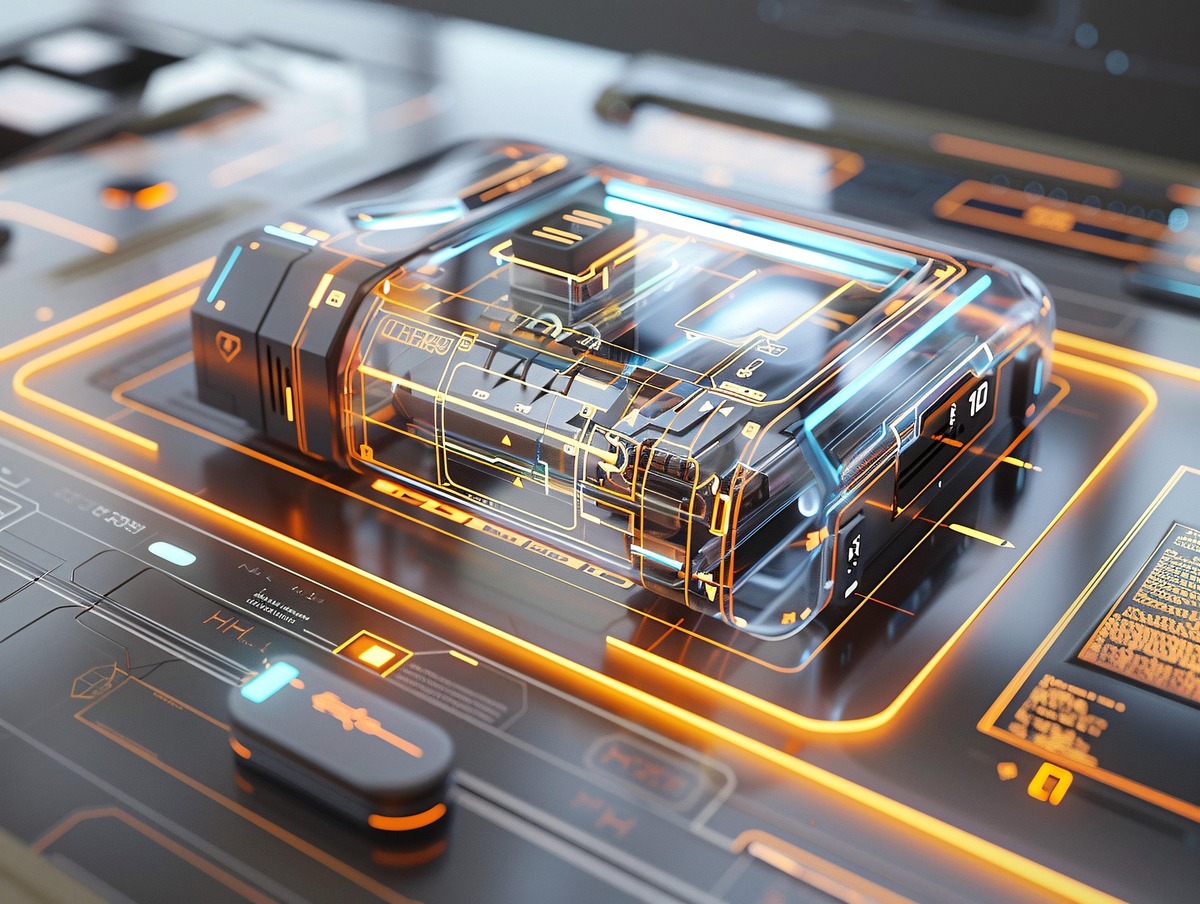
This radical shift is the result of a rapid evolutionary leap. We have moved from simple Code Assistants—which acted as glorified calculators for text—to AI-Native Autopilots, autonomous systems capable of architecting, building, and maintaining entire digital ecosystems. For solo creators, this is the ultimate democratization of power.
The Three Generations of AI Development
To understand where we are in 2026, we must look at the three distinct phases that brought us to the current "Autopilot" reality.
Generation 1: The Assistant (2022–2023)
The journey began with Large Language Models acting as autocomplete tools. Developers used these to generate snippets of code or find bugs in a single function. While helpful, the AI was "stateless"—it didn't understand the project's overall structure. The human remained the primary architect, spending 90% of their time writing code and 10% using AI to speed up the process.
Generation 2: The Collaborator (2024–2025)
This phase introduced "AI-Native IDEs" (Integrated Development Environments). These tools began to index the entire codebase. They didn't just suggest a line of code; they suggested how a change in the "User" database would necessitate a change in the "Profile" page. The ratio of work shifted: humans became "Reviewers," while the AI handled the heavy lifting of writing logic.
Generation 3: The Autopilot (2026)
We are now in the third generation. AI-Native platforms are no longer just editors; they are Autonomous Agents. You no longer start with a blank file; you start with a "Statement of Intent." The Autopilot takes that intent and executes the full lifecycle of development—from server provisioning to frontend deployment—without human intervention in the middle.
The Core Pillars of AI-Native Platforms in 2026
What makes a platform "AI-Native" in 2026? It isn't just a chatbot in the sidebar. It is a system built from the ground up to leverage Agentic Workflows.
1. Multi-Agent Orchestration
Modern platforms use a "Team of Agents" model. When a solo creator requests a new feature—for example, "Add a real-time flight tracking map to my travel app"—the platform triggers a coordinated response:
The Architect Agent: Decides which APIs to use and how to structure the data.
The Coder Agent: Writes the functional code in the background.
The QA Agent: Spins up a virtual environment to test the feature for edge cases.
The Security Agent: Scans for API key leaks or vulnerabilities before the code goes live.
2. Natural Language Blueprints
In 2026, the primary programming language is English (or any human language). "Code" has become the assembly language that the AI writes for the machine. Solo creators use "Blueprints"—high-level descriptions of logic and UX—to guide the Autopilot. The system interprets these "Vibes" and converts them into production-ready, optimized syntax.
3. Self-Healing Codebases
One of the biggest hurdles for solo creators used to be "Technical Debt." As an app grew, it became harder to maintain. AI-Native Autopilots have solved this through self-healing. When a third-party API updates its documentation or a library becomes deprecated, the Autopilot automatically refactors the codebase to ensure compatibility. The software essentially maintains itself.
Why Solo Creators are Outperforming Large Teams
The evolution from assistants to autopilots has created a "Scale Inversion." In the past, a team of 10 was faster than 1. In 2026, a solo creator using an Autopilot is often faster than a team of 10 because they have Zero Communication Overhead.
No Meetings: The solo creator doesn't need to explain the vision to five different people. They explain it once to the AI.
Instant Context: The AI has a perfect memory of every line of code ever written in the project. It doesn't need to "onboard" or read documentation.
Parallel Execution: A solo creator can tell the Autopilot to build five different features simultaneously. The agents work in parallel, delivering a week’s worth of human labor in minutes.
Case Study: The 24-Hour Travel SaaS
Imagine a solo creator in 2026 wanting to build a niche platform for "Sustainable Travel in Southeast Asia." Using an AI-Native Autopilot, the timeline looks like this:
Hour 1: The creator describes the core business model. The AI suggests a tech stack, generates a branding kit, and sets up a database for "Eco-friendly stays."
Hour 4: The AI has scraped and verified 1,000 initial listings using specialized "Research Agents." It builds the search engine with natural language filtering.
Hour 8: The Autopilot generates a mobile-responsive frontend with a custom map integration. It autonomously handles user authentication and payment gateway setup.
Hour 12: The creator reviews the "Draft." They use voice commands to tweak the UI ("Make the buttons more organic, use a forest green palette").
Hour 24: The app is live, deployed on global edge servers, with an automated marketing agent already drafting the first social media announcements.
The Shift in Skillsets: From Syntax to Strategy
As platforms move toward full autonomy, the "bar to entry" has lowered, but the "ceiling for excellence" has risen. Solo creators in 2026 are not valued for their ability to write Python or JavaScript; they are valued for their Systems Thinking.
The New Required Skills:
Requirement Engineering: The ability to define exactly what a product should do and for whom.
Curation and Taste: Since the AI can generate infinite variations, the human’s job is to choose the one that resonates emotionally with users.
Ethical Oversight: Ensuring the AI-generated data is unbiased and that the user’s privacy is protected at every layer of the architecture.
Challenges and Governance in the Autopilot Era
Despite the efficiency, the rise of AI-Native development brings new challenges.
The "Black Box" Problem: If a solo creator doesn't understand the underlying code, they may struggle when the Autopilot makes a logic error. Platforms in 2026 have addressed this by providing "Explainability Layers," where the AI narrates its reasoning process.
Homogenization: There is a risk that AI-built apps will all start to look the same. Successful solo creators are those who intentionally push the AI to break patterns and create unique, "human-feeling" interfaces.
Conclusion: The Era of the One-Person Unicorn
The evolution from Code Assistants to Autopilots is more than a technical upgrade; it is a shift in the human-machine relationship. In 2026, software is no longer "written"—it is "orchestrated."
For solo creators, this means the distance between an idea and a market-ready product has shrunk to almost zero. We are seeing the rise of "One-Person Unicorns"—companies valued at over a billion dollars with a single human founder. These individuals spend their time on strategy, community, and vision, while their AI-Native Autopilots handle the invisible complexity of the digital world.
The rectangle of the code editor is being replaced by the canvas of the imagination. For the creators at IntoTravels and beyond, the message is clear: You are no longer limited by what you can code, but by what you can imagine.


