
Smart Boots 2.0: The New All-Terrain Footwear That Adjusts Grip Based on Real-Time Weather Data
For the intrepid traveler, the choice of footwear is often a compromise. You pack a pair of heavy-duty hiking boots for the trails, a sleek pair of sneakers for the city, and perhaps something waterproof for the unpredictable rain. This "multitasking" baggage adds weight and complexity to any itinerary. However, in 2026, the industry is witnessing a technological leap that renders the multi-shoe packing list obsolete.
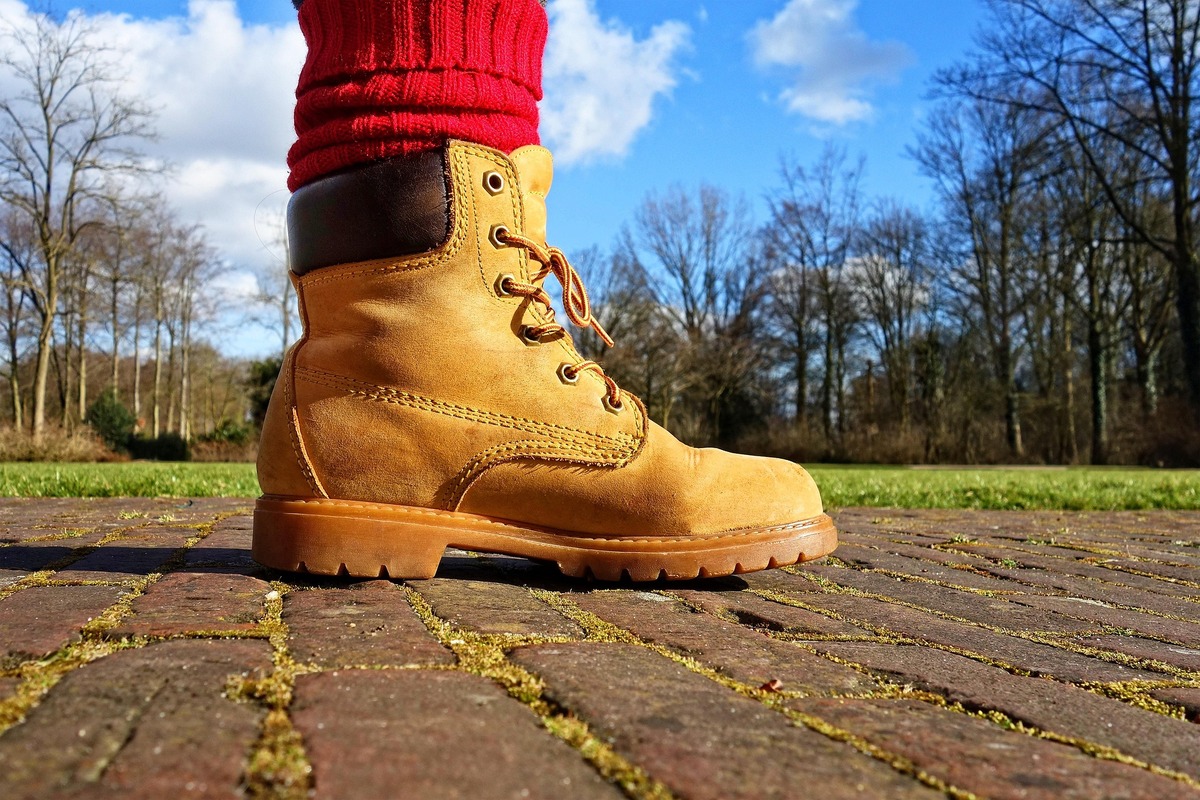
Welcome to the era of Smart Boots 2.0. This isn't just about comfort or durability; it is about active adaptation. We are seeing the rise of all-terrain footwear equipped with integrated micro-sensors and "smart" outsoles that change their physical properties based on real-time weather data and the terrain beneath your feet.
At Into Travels, we explore how this "living" footwear is set to become the most essential piece of gear for the modern adventurer.
The Evolution of the Sole: From Rubber to Robotics
To understand Smart Boots 2.0, we have to look at the limitation of traditional soles. Standard rubber outsoles are "fixed." A soft rubber provides excellent grip on dry rock but wears down instantly on pavement. A hard rubber lasts longer but becomes dangerously slippery on ice or wet tile.
Smart Boots 2.0 solve this through Active Traction Technology. Instead of a static piece of molded rubber, the outsole is a complex system of Shape-Memory Polymers (SMPs) and micro-pistons.
How It Works:
Environmental Sensing: The boots connect via Bluetooth to your smartphone’s hyper-local weather feed. If the forecast indicates a sudden drop in temperature or incoming sleet, the boots "prepare" for the change.
Surface Analysis: Built-in pressure sensors and gyroscopes in the midsole analyze the surface 1,000 times per second. They can detect the difference between loose gravel, slick mud, and polished airport marble.
Mechanical Adaptation: Using a tiny, rechargeable actuator, the boot can actually alter the depth and angle of its "lugs" (the tread pattern). On soft mud, the lugs extend for maximum bite. On flat pavement, they retract to create a smooth, energy-efficient walking surface.
Real-Time Weather Integration: The Game Changer
The standout feature of the 2.0 generation is the integration of Meteorological Data. Traditional "smart" shoes only reacted to the ground. Smart Boots 2.0 anticipate it.
Imagine you are hiking in the Scottish Highlands. The weather is currently clear, but your weather app detects a 90% chance of rain in the next 10 minutes. The boots receive this data and begin to alter the chemical tension of the outer membrane. By the time the first raindrop hits, the boot has already shifted from "Breathable Mode" to "Maximum Waterproofing."
Furthermore, as the temperature approaches freezing, the smart material in the sole undergoes a molecular shift. The rubber becomes "stickier" at a microscopic level, preventing the hardening that usually leads to slips on black ice. This isn't just a luxury; it’s a critical safety feature for high-altitude trekkers and winter city-dwellers alike.
Beyond Grip: Thermal Management and Fatigue Reduction
While "Active Grip" is the headline, Smart Boots 2.0 address two other major pain points for travelers: Temperature Regulation and Physical Exhaustion.
1. Adaptive Thermoregulation
Traditional insulation (like Thinsulate) is static. If you walk from the cold outdoors into a heated museum, your feet sweat, leading to discomfort and blisters. Smart Boots 2.0 utilize Phase Change Materials (PCM). These materials absorb heat when your feet get too hot and release it when the external temperature drops. The result is a consistent "micro-climate" inside your boot, regardless of the weather.
2. Kinetic Energy Recovery
Walking ten miles a day on a city tour or a mountain trail takes a toll on the joints. The 2.0 boots feature Active Cushioning. Using the same sensors that detect terrain, the midsole can stiffen for better "power transfer" when climbing a steep hill or soften for "impact absorption" when descending on hard granite. Some models even use a "rebound" mechanism that captures the energy of your heel strike and returns it to your toe-off, effectively reducing the muscular effort required to walk.
Sustainability in the Smart Era
One might assume that adding electronics to footwear makes it less eco-friendly. However, the Smart Boots 2.0 movement is closely tied to the "One-Boot" Philosophy. By creating a single pair of shoes that replaces three or four specialized pairs, we reduce the total volume of manufacturing, shipping, and waste. Furthermore, many of these boots are designed with a Modular Outsole. In the past, when the tread wore out, you threw the whole boot away. With the 2.0 system, the electronics and leather upper are designed to last a decade, while the "Smart Tread" module can be snapped off and replaced or upgraded, significantly extending the product's lifecycle.
Connectivity: The "Into Travels" Digital Ecosystem
In 2026, your boots are part of your digital travel kit. Through a dedicated app, travelers can access insights that were previously impossible:
Gait Analysis: The boots can tell you if you are over-pronating or if your backpack is poorly balanced, helping you prevent injury before it happens.
Terrain Heatmaps: Share data with the travel community. If your boots detect a particularly slippery or unstable section of a popular trail, that data is anonymously uploaded to help other travelers stay safe.
Automatic SOS: In the event of a hard fall in a remote area, the boots' accelerometers can trigger an emergency alert via your phone, sending your GPS coordinates to local search and rescue.
What to Look for When Choosing Smart Boots
If you’re looking to upgrade your footwear for the 2026 travel season, keep these specifications in mind:
Battery Life: Look for "Energy Harvesting" features. Some Smart Boots can partially recharge their own batteries using the kinetic energy generated by your steps. A minimum of 72 hours of active sensing is the industry standard.
Weight: Despite the tech, a Smart Boot should not weigh more than a standard leather hiker. Look for "Carbon-Infused" frames that keep the weight under 600g per boot.
Manual Overrides: Tech can fail. Ensure the boots have a "Passive Mode" where the lugs stay in a neutral, safe position if the battery dies.
Conclusion: Stepping into the Future
The "Invisible" Suitcase and the "Modular" Packing system have revolutionized how we carry our lives, but Smart Boots 2.0 are revolutionizing how we move through the world. By bridging the gap between meteorological data and physical performance, these boots offer a level of safety and versatility that was previously unthinkable.
The days of checking the weather to decide which shoes to wear are over. With Smart Boots 2.0, you simply start walking, and let your footwear handle the rest. Whether it’s a sudden snowstorm in Zurich or a muddy trek in Vietnam, you’ll always have the perfect grip for the moment.


